Current and Turbidity Monitoring for Dredge Planning
Real-time current and turbidity monitoring enables dredge superintendents to optimize workability while maintaining environmental compliance.
What You'll Achieve
Compliance Response Within Permit Windows
Detect turbidity exceedances the moment they develop, giving superintendents the 15-minute response window permits require rather than discovering violations after the fact.
Workability Optimization Across the Campaign
Transform current data into precise workability forecasts that maximize productive hours while avoiding conditions that force unplanned shutdowns.
Defensible Environmental Records
Build a continuous compliance record that demonstrates permit adherence through every phase of the dredging campaign, protecting against disputed violations.
Balancing Production Targets Against Environmental Limits
Dredge superintendents face a fundamental tension: maximizing production while staying within environmental permit conditions. Cutter suction dredgers halt at significant wave height (Hs) greater than 2.0 metres (6.6 feet) or when cross-currents exceed 2 knots. Turbidity permits typically trigger at 50 NTU above background—three consecutive readings forces immediate response. Near coral or seagrass, thresholds tighten to 5-10 NTU. When conditions cross limits, superintendents have roughly 15 minutes to decide: reduce production, halt hopper overflow, or stop dredging entirely. The cost of getting this wrong runs both directions.
Traditional monitoring relies on spot sampling—boat-based water collection at scheduled intervals that may be hours apart. Between samples, conditions change with tides, currents, and dredge position. A turbidity plume can develop, migrate toward sensitive habitat, and trigger permit violation before the next sample reveals the problem. Current data comes from forecasts or distant stations that cannot capture site-specific conditions. This gap between environmental reality and available data forces superintendents into conservative decisions that sacrifice workability, or aggressive ones that risk permit violations halting the project entirely.
Continuous Compliance Monitoring with Real-Time Decision Support
What Gets Deployed
Because permit compliance requires documenting conditions at multiple points simultaneously, the monitoring network positions turbidity and current sensors upstream of the dredge, downstream toward sensitive receptors, and at the dredge location itself. This minimum three-point configuration—often expanded for larger projects—captures the complete sediment transport picture that spot sampling cannot provide. Wave sensors feed workability calculations while water quality parameters[1] document the broader environmental conditions permits require.
What the Data Reveals
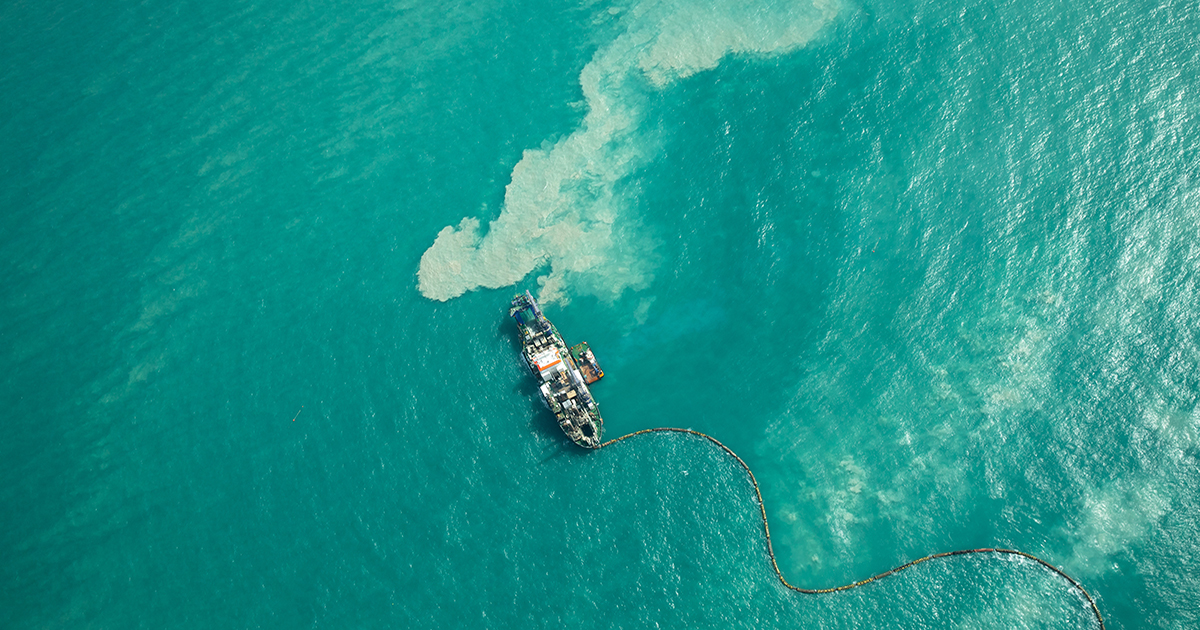
With continuous turbidity readings, superintendents see plumes develop in real-time[2] rather than discovering them hours later. The upstream sensor establishes true background conditions as they shift with tides and weather—not the static baseline from permit applications. When downstream readings approach the 50 NTU threshold, alerts trigger while response options remain open. Current data reveals the actual cross-current at the dredge face, showing exactly when conditions approach the 2-knot limit that degrades cutter efficiency and forces shutdown.
Over the campaign, this continuous record transforms workability from a rough estimate to a precise metric. Current patterns through tidal cycles become predictable, allowing superintendents to anticipate windows of reduced cross-current and schedule high-production periods accordingly. The data reveals how turbidity correlates with specific operations[3]—overflow cycling, cutter speed, material type—enabling production adjustments that maintain compliance without unnecessary shutdowns.
What This Enables
Because alerts arrive while conditions are approaching thresholds rather than exceeding them, superintendents can implement graduated responses. Activating the green valve system, reducing overflow, or adjusting cutter position often maintains production at reduced levels—avoiding the complete shutdown that permit violation would require. This operational flexibility exists only when data arrives fast enough to act on it.
The continuous compliance record proves permit adherence through documentation that spot sampling cannot match. When regulators question a turbidity event, timestamped data at multiple points shows exactly when conditions changed, how the operation responded, and what receptor locations experienced. This defensible record protects against disputed violations that could halt work or trigger penalties exceeding the entire monitoring investment.
Case Study
How Boskalis uses the Spotter Platform to measure real-time subsurface ocean currents and assess site workability
Boskalis leverages Spotter for wave and ocean current measurement, collecting real-time data that supports safe and efficient operations across their dredging, offshore contracting, and maritime services projects.
See full example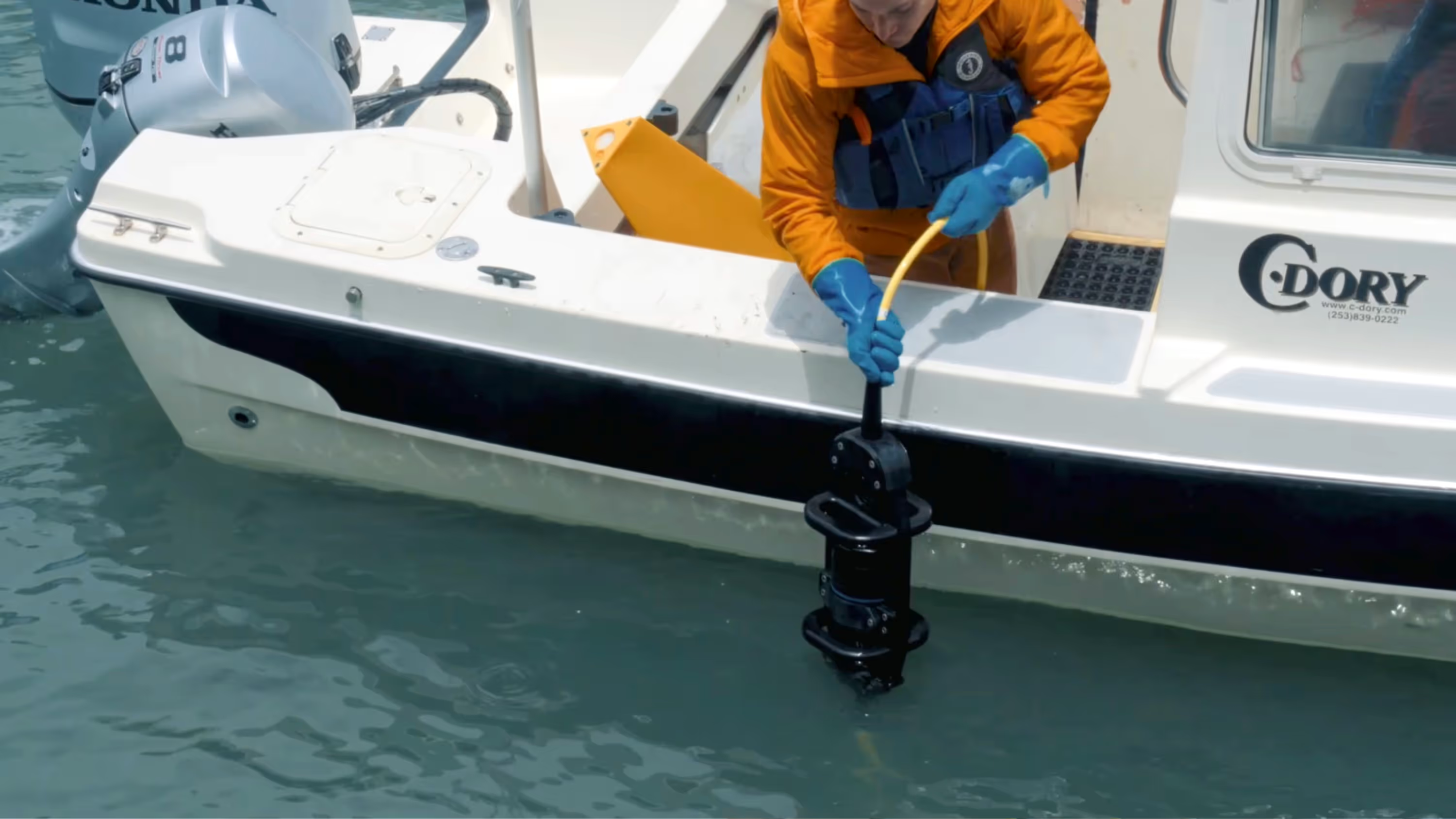
Recommended Systems (3)
Because dredging compliance depends on capturing both the sediment plume behavior and the metocean conditions driving workability, the monitoring approach divides these roles between water quality stations positioned for compliance documentation and a metocean station providing operational decision support. Projects covering larger areas or approaching multiple sensitive receptors typically require additional compliance stations to maintain the spatial coverage permits demand.
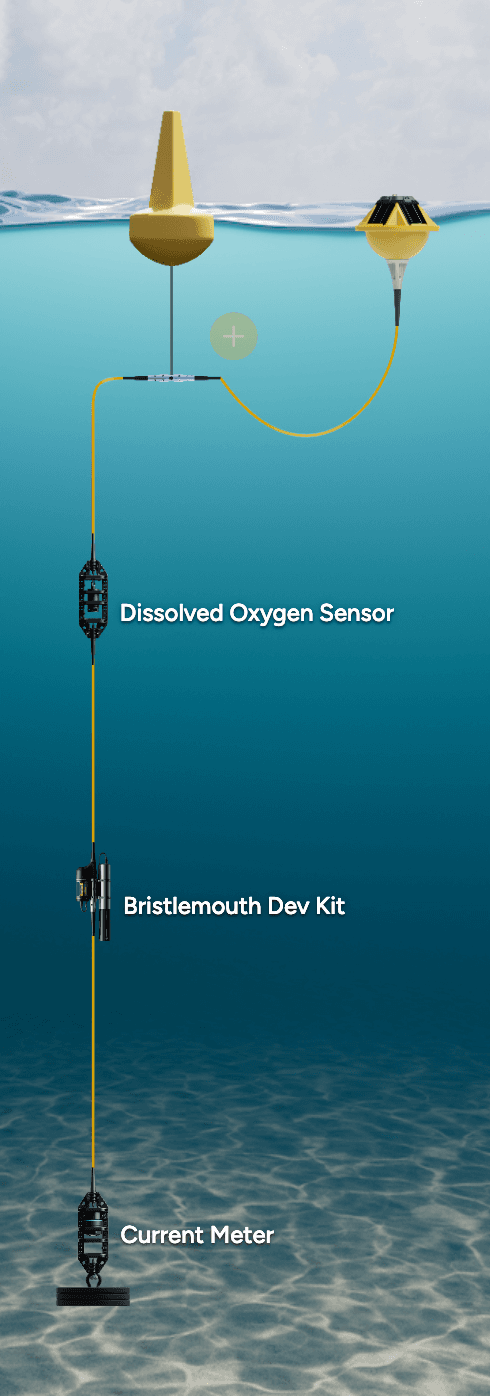
System Overview
Purpose
Capture turbidity and current conditions at the three-point minimum (upstream, downstream, dredge location) required for permit compliance documentation.
Deployment Context
Positioned to bracket the dredge operation—upstream establishes background, downstream monitors receptor approach, dredge location ties readings to specific operations.
Sensors
Required
Turbidity
Detects sediment concentration at continuous intervals, enabling response before consecutive readings trigger permit thresholds.
Current Meter
Measures actual cross-current at dredge face rather than relying on forecasts; directly determines workability limits.
Important
Dissolved Oxygen
Documents water quality conditions permits increasingly require; DO below 2 mg/L indicates hypoxic stress on marine life.
Nice-to-have
Temperature (Water)
Provides context for DO readings since oxygen solubility varies with temperature; supports biological impact assessment.
Sources
- [1]The Impact of Waves and Tidal Currents on the Sediment Transport at the Sea Port— Doi
- [2]Near-Real-Time Turbidity Monitoring at Global Scale Using Sentinel-2 Data and Machine Learning Techniques— Doi
- [3]Sediment transport modeling of trenching activities: a case study for the Safaniya coastal waters in the Arabian Gulf— Doi
Use of this content is subject to Sofar's Terms of Use and Privacy Policy.