
Underwater Acoustic Monitoring for Vessel Noise in Ports & Harbors
Continuous acoustic and environmental monitoring to understand vessel-driven underwater noise and its impact on sensitive habitats near port operations.

Key Benefits
Protect Sensitive Marine Habitat
Gain visibility into how vessel movements contribute to underwater noise levels that may affect nearby wildlife.
Improve Operational Transparency
Provide clear evidence to regulators, stakeholders, and community partners of responsible port management practices.
Enable Proactive Noise Management
Identify patterns that help port teams adjust operations before impacts escalate.
Understanding the Problem
Ports operate at the intersection of heavy vessel traffic, complex environmental conditions, and growing expectations for responsible stewardship of nearby marine ecosystems. Underwater noise produced by commercial ships, tugs, ferries, and industrial equipment can disrupt sensitive species that rely on sound for navigation, foraging, and communication. As regulations evolve, ports face mounting pressure to understand and manage their acoustic footprint.
Traditional acoustic monitoring has relied on periodic surveys or manual hydrophone deployments, offering only isolated snapshots of conditions. These limited measurements cannot reveal how noise levels shift throughout the day, vary with vessel types, or interact with changing ocean conditions. Without continuous insight, ports struggle to demonstrate compliance, respond to concerns, or make informed planning decisions.
How We Address This
This approach establishes a dedicated network of acoustic and environmental sensors positioned across the port area to reveal both vessel-generated noise and the environmental factors that influence it. The system creates a clear, ongoing picture of how port activities interact with adjacent habitats.
Data Collection & Monitoring
Hydrophones capture underwater sound signatures while Current/ADCP instruments record water movement that can influence noise propagation. Temperature and salinity sensors add context by showing how stratification or shifting water masses may affect acoustic behavior.
Actionable Insights
The combined dataset highlights when noise increases coincide with vessel arrivals, departures, or maneuvering. It also uncovers how physical conditions shape sound transmission pathways, helping teams interpret acoustic hot spots or recurring patterns with greater accuracy.
Impact
Port operators can adjust vessel scheduling, tug operations, or harbor maneuvers when consistent noise patterns appear near ecological zones. The data strengthens environmental reporting, supports habitat protection efforts, and demonstrates a clear commitment to sustainable port operations.
Recommended Systems (2)
To understand both port-wide vessel noise and its effects on sensitive habitat areas, two complementary monitoring systems are recommended. One focuses on tracking acoustic signatures at the harbor entrance to characterize vessel-specific noise, while the second provides ecological context near vulnerable nearshore zones. Together they create a complete picture of acoustic activity and its potential impacts.
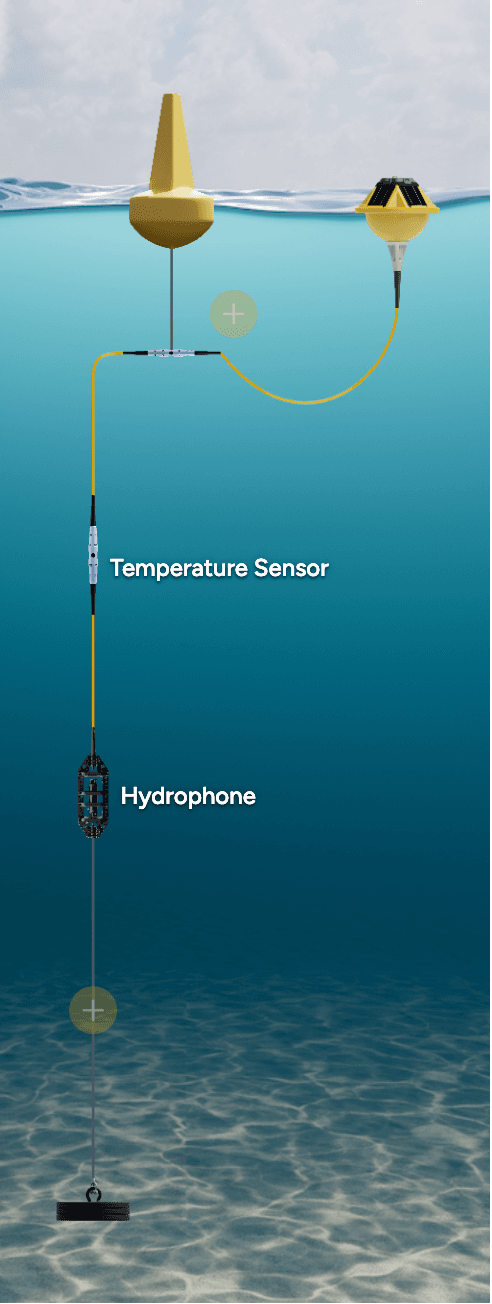
System Overview
Purpose
Characterize vessel-specific underwater noise as ships enter and exit the port. |
Deployment Context
Positioned near the main approach channel where vessels slow, maneuver, and generate distinct acoustic signatures.
Sensors
Required
Hydrophone
Captures vessel noise profiles and identifies acoustic signatures associated with maneuvering and propulsion activity.
Nice-to-have
Temperature
Reveals conditions affecting sound propagation as thermal layers within the water column shift.